

Fashion is not only a means of cultural and self-expression, but also has a significant environmental and social impact . Two sharply different trends, fast fashion and slow fashion, represent the extremes of rapidly changing trends and sustainable fashion philosophy. In this article, we will thoroughly introduce fast fashion and slow fashion trends and their global impact!
What is fast fashion?
Fast fashion is a type of cheap, trendy clothing based on mass production that responds to rapidly changing trends in the fashion industry by launching new collections in a short time to meet rapidly changing customer needs.
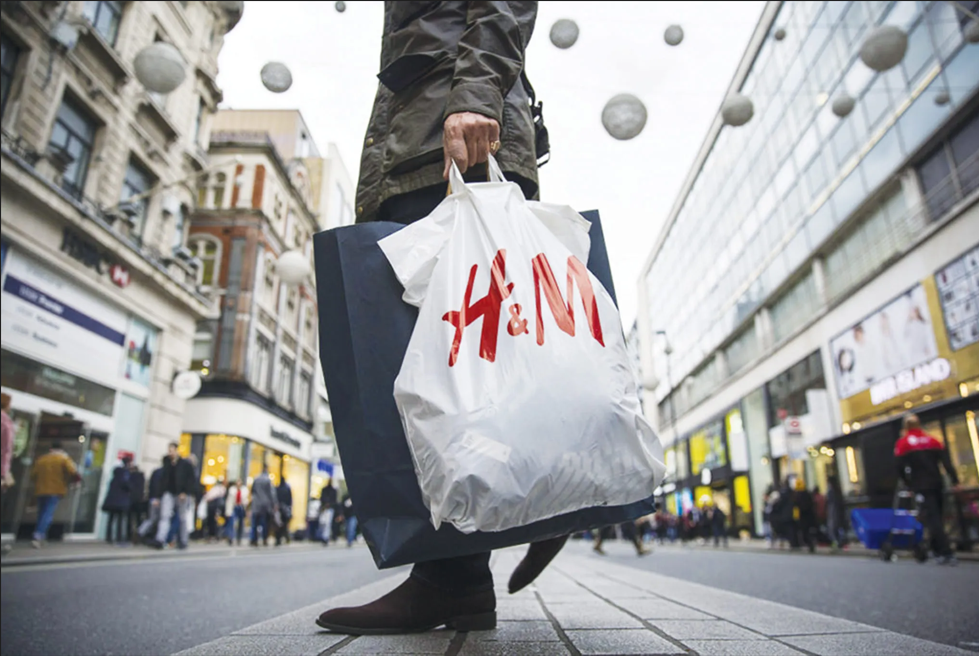
Its goal is to bring the latest fashion trends to a wide range of consumers quickly and at affordable prices .
The essence of this model is to be as affordable as possible, allowing consumers to update their wardrobe frequently. However, the low price often comes with lower quality materials, such as synthetic fibers.
Perfect examples of fast fashion include H&M , Zara and CCC .
The history of fast fashion
Fast fashion traces its roots back to the Industrial Revolution of the 19th century, when mechanized textile manufacturing revolutionized clothing production. The earlier, custom-made pieces produced using artisanal methods were gradually replaced by ready-made clothes that could be produced more cheaply and quickly.
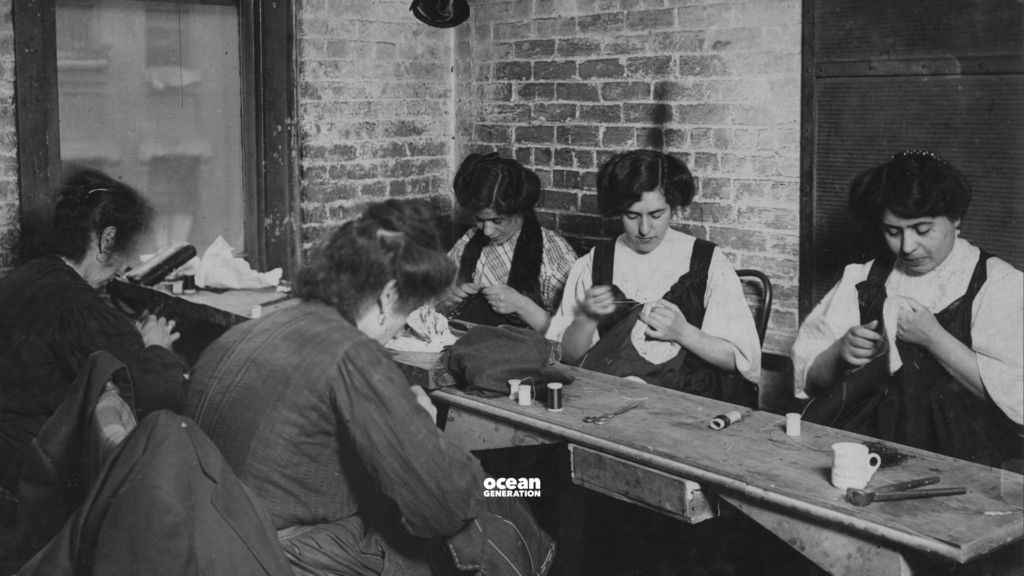
Source: Ocean Generation - History of fast fashion
As a result, fashion was no longer just a privilege of the wealthier classes, but also became accessible to the middle class, which brought about a significant social transformation. In the 1960s and 1970s, the French "prêt-à-porter" (ready-to-wear) movement accelerated this process. With the spread of prêt-à-porter, designer fashion pieces were no longer exclusively reserved for catwalks and elite events, but were also integrated into the everyday lives of ordinary people.
The mass availability of clothes also strengthened the role of fashion in shaping identity and self-expression, laying the foundation for the later fast fashion, which is based on rapid changes and the need for constant novelty.
In the 2000s, the explosive growth of globalization and online commerce gave a new impetus to the rise of fast fashion. By building international supply chains and using cheap, fast production technologies, brands were able to respond almost instantly to changing consumer demands.
The environmental impacts and dark side of fast fashion
Environmental problems:
Fast fashion is unsustainable. It takes around 2,700 litres of water to produce a single cotton T-shirt , which is equivalent to the average person’s drinking water consumption for almost two and a half years. Synthetic materials such as nylon, which are used alongside cotton, are also a serious concern: they release microplastics when washed, which are responsible for a significant portion of ocean pollution .
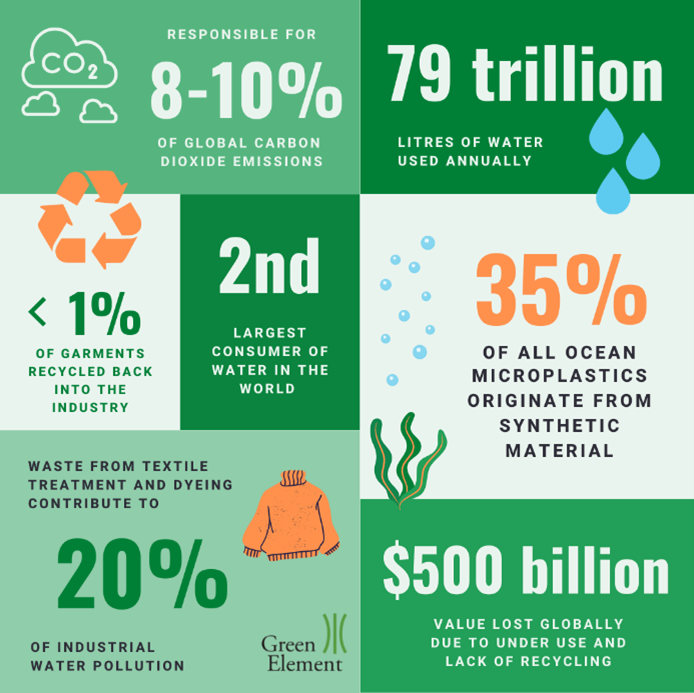
Source: greenelement.co.uk
The textile industry also accounts for 8-10% of global carbon emissions and uses 79,000 billion liters of water. In addition, fast fashion is responsible for 35% of the microplastics in the ocean.
It is also important that less than 1% of used clothing is recycled back into the industry!
Social impacts:
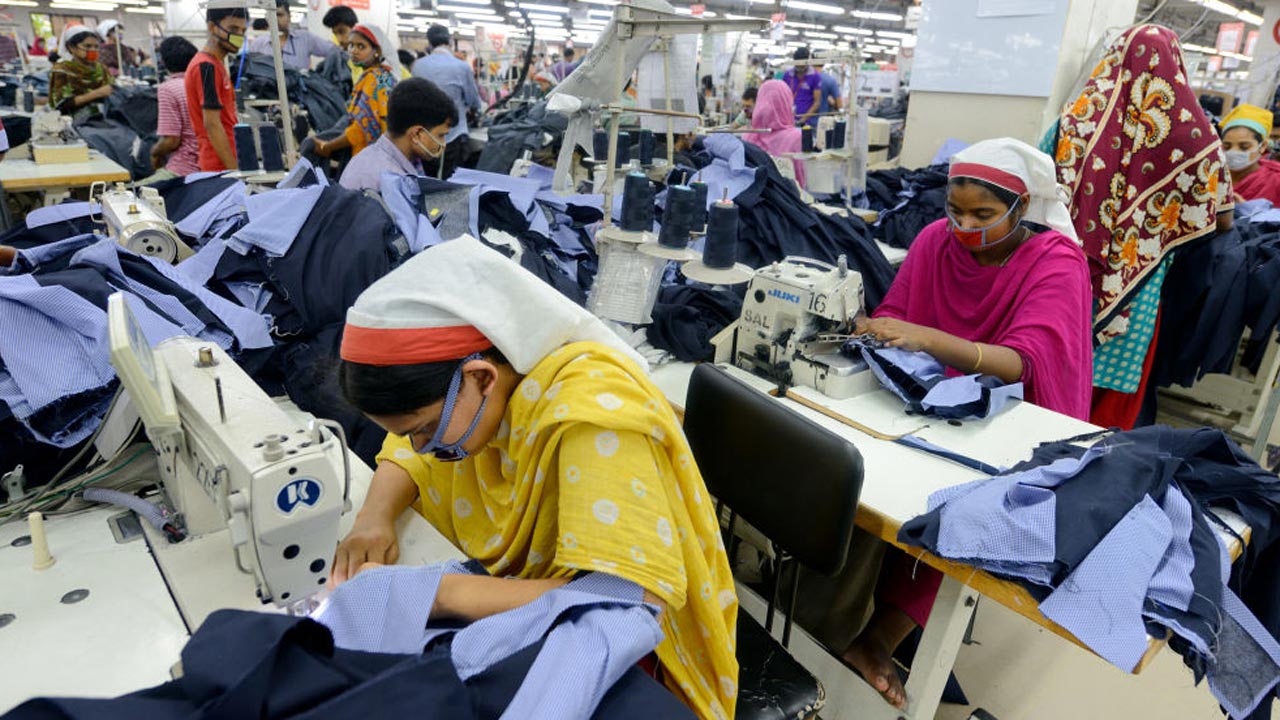
Fast fashion not only exploits the environment, but also people. In developing countries like Bangladesh , millions of people work in garment factories , often in inhumane conditions , for extremely low wages.
Rapidly changing fashion cycles encourage consumers to constantly shop, which further exacerbates the problem by maintaining a vicious cycle of overconsumption and overproduction.
What is slow fashion?
Slow fashion is a fashion movement that focuses on sustainability , ethics , and quality craftsmanship , as opposed to the rapid and mass production of fast fashion.
Slow fashion strives to ensure that garments are durable, timeless and produced in an environmentally friendly manner. To this end, the primary consideration in design and production is the use of natural, organic materials, such as organic cotton, linen or recycled fabrics.

Slow fashion is made in smaller factories or artisan workshops , which not only supports the local economy but also reduces the environmental impact of supply chains. Transparent supply chains ensure that consumers know exactly where the clothing they buy comes from and under what conditions it was made.
Fast fashion vs slow fashion - advantages, disadvantages
The biggest advantage of fast fashion is its speed and low prices. Customers can follow the latest fashion trends in a short time and update their wardrobe relatively cheaply.
Fast fashion allows many people to dress in the most trendy and current clothes, but at the same time it also has serious disadvantages: mass production causes extreme environmental pollution, the quality of the clothes is often low, and inhumane working conditions are typical in production chains.
In contrast, the advantages of slow fashion include long-term sustainability , the use of quality raw materials , and ensuring ethical production conditions .
The clothes are more durable, produce less waste , and support local economies . Slow fashion also encourages conscious consumer choices, as shoppers make thoughtful, rather than impulsive, choices.
The downside is that the prices of the products are higher, which is a barrier for many. The range is narrower and the collections are updated less frequently, which may make them less attractive to the fashion-loving public. To overcome this, manufacturers strive to create timeless collections.
We are proud to be part of the slow fashion movement at PatentDuo . We make sportswear from 100% organic cotton and recycled plastic to stand for sustainability, domestic production, and premium, comfortable clothing.
0 comments